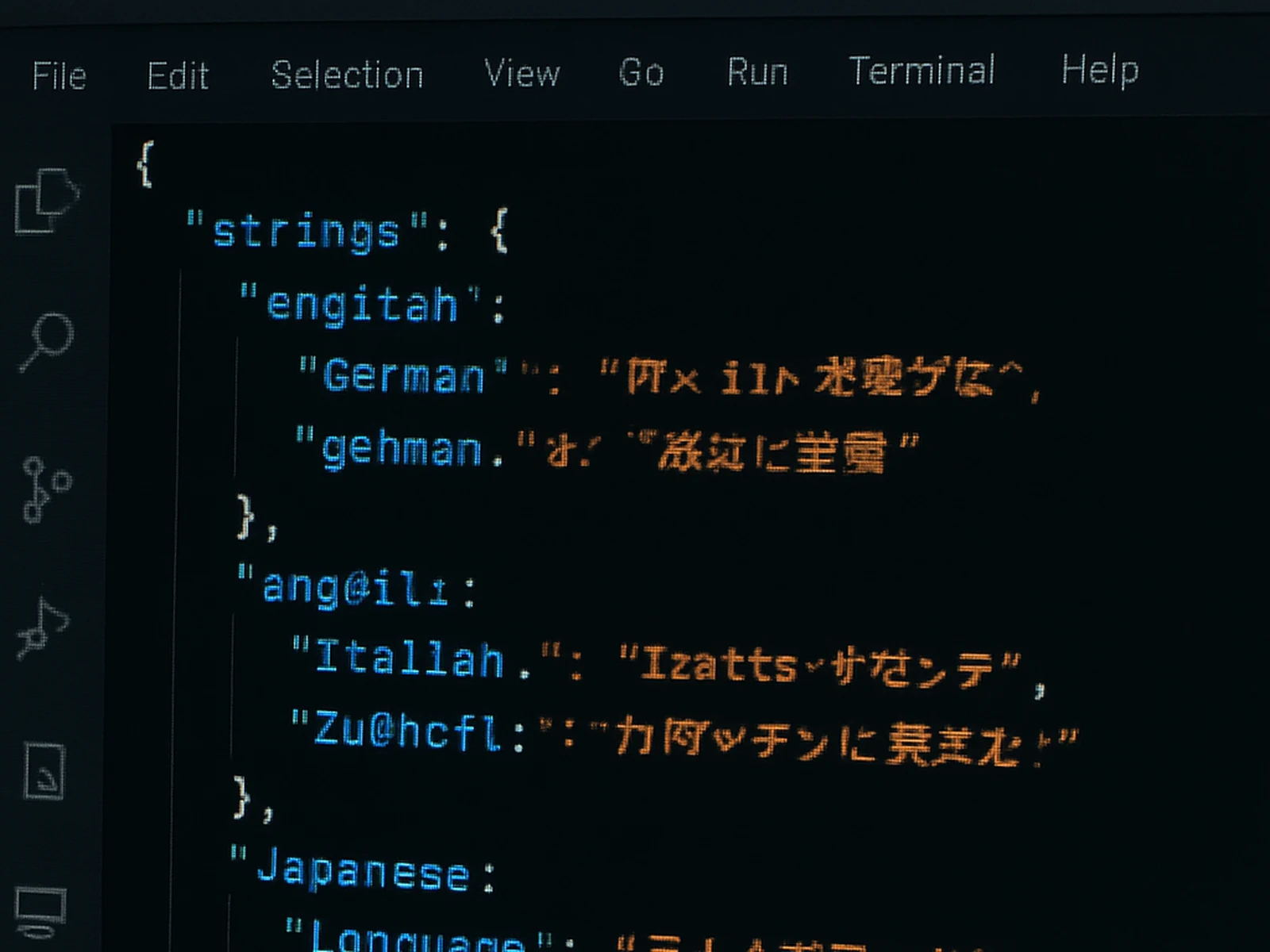
Software localization fails in specific, predictable ways when it is done by agencies that treat a strings file like any other document. Placeholders get dropped or modified. Plural forms are handled incorrectly for languages with multiple plural rules (Russian, Polish, Arabic). String length limits for UI buttons are ignored. Variables get translated literally instead of preserved. Context comments in the source file go unread.
We translate software strings with translators who have spent time in development or software product environments. They know what {first_name} means in a string. They know that a button label reading "Save changes" has a 20-character limit in most UI frameworks. They know that some languages need to be flagged for RTL support if the target includes Arabic or Hebrew. These are not edge cases we handle after a QA failure -- they are standard concerns we address before translation begins.
Our software localization workflow for each project includes: export format handling without modification to structure or syntax; placeholder integrity verification in QA (we scan for missing or altered variables before delivery); context review where source comments are available in the file; character count flagging for strings with visible length constraints; and plural form handling for languages that require it.
We work with all major localization file formats: JSON (flat and nested), XLIFF 1.2 and 2.0, Android strings.xml, iOS .strings and .stringsdict, GNU PO/POT, PHP language arrays, YAML, and Ruby I18n YAML. We return files in the same format and structure as provided -- no reformatting required from your development team.
SaaS companies, mobile app developers, enterprise software vendors, and development teams localizing for international markets.